Explore pelvic structures of fish through photographs of specimens and fossils. Conduct three experiments to collect and analyze data. Use graphing tools and statistical analysis to draw evolutionary conclusions.
Calculate reactions with built-in equations and thermodynamic data. Convert units for pressure, temperature, and concentration. Solve material and energy balance problems. Access property tables for gases and liquids.
Record and visualize physical phenomena using smartphone or tablet sensors. Measure sound, motion, light, and temperature. Connect external sensors like micro:bit and Arduino for advanced experiments.
Access for math, physics, and chemistry with a searchable database. View in clear formatting. Save and organize notes. Download and use offline. Receive updates with new .
Prepare for the ATI 7 exam with questions aligned to the test. Use a realistic exam simulator and a personalized study plan that adjusts based on your test date and weak areas. Track progress and receive feedback to determine readiness.
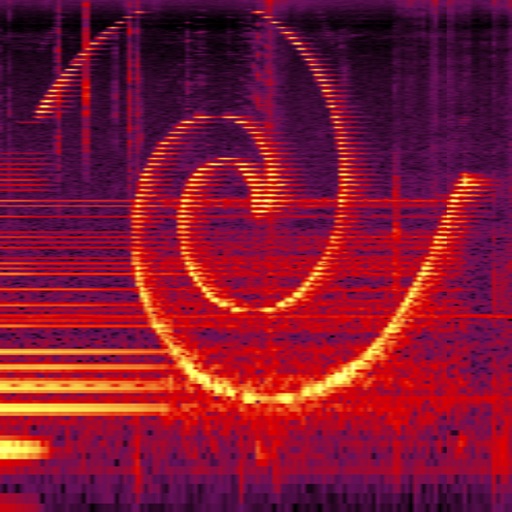
Perform real-time spectral analysis of sounds. View images with adjustable FFT-resolutions, frequency and amplitude scales, and color schemes. Save and share spectrograms. Access bode plot modes with averaging and maximum calculations.
The app wirelessly collects data from up to 15 built-in science sensors for iPad. It allows for setup and data analysis of hands-on experiments in various science subjects, engaging students with interactive features.
Take quizzes on general topics with questions from 10 subjects. Select questions from predefined categories. Track progress and review answers for learning. Share results and compete with others.
The app provides flashcards for the MCAT, covering Biology, Physics, and Chemistry with 455 questions. It includes illustrations and tracks user progress with options to mark difficult questions for review.