Explore celestial objects with interactive star maps and detailed information. Identify constellations and planets. View historical and cultural facts. Set location-based sky views and track celestial events.
Convert across categories with a modern interface. Navigate using sidebar and tab bar. Create multiple windows and drag items to new screens. Share data and access context menus. Includes a quick start guide and light/dark modes.
IEP Scheduler calculates dates for upcoming evaluations and timelines. Tally This tracks counts during therapy sessions. Percent Right computes percentage correct during trials. Age Finder determines client ages based on birthdates.
Calculate hydraulic parameters like capillary rise, viscosity, hydrostatic pressure, and head loss. Convert between metric and imperial units. Solve for pressure head, velocity head, and specific energy head.
Explore the Solar System with 3D models of the Sun, 8 planets, 5 dwarf planets, and over 20 major moons. View real-time positions of celestial bodies. Rotate, zoom, and navigate through the Solar System.
Explore celestial bodies and track planetary motion
Explore celestial objects with 3D models and interactive maps. Learn about planets, stars, and galaxies through guided tours and educational content. Set bookmarks and revisit favorite locations. Share discoveries via social media.
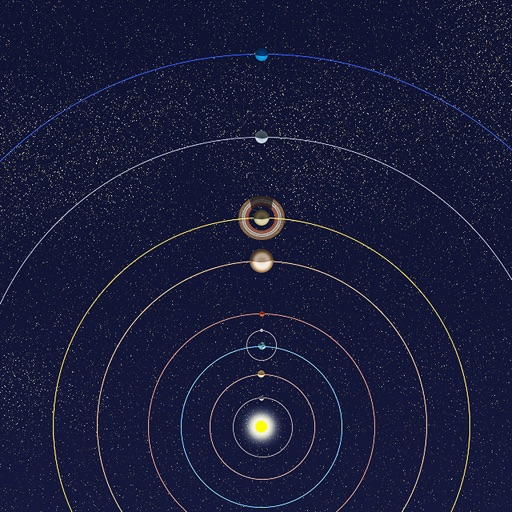
View positions of all solar system planets at any date. Adjust time to see real-time movements. Display accurate orbit sizes, eccentricity, and orbital shapes based on NASA data. Show realistic planet sizes relative to each other.
Get real-time weather data from the Curiosity Rover. Track planetary positions with accurate celestial mapping. Share observations on Twitter and Facebook.
Learn through and active recall techniques to improve memory retention. Import study materials from Notion, Obsidian, Markdown, Evernote, Logseq, CSV, Roam Research, or OneNote. Create local flashcards. Review cards based on performance and timing.
Learn STEM concepts through interactive truck racing games. Build and customize tracks. Explore physics principles like acceleration and adhesion. Complete challenges that promote critical thinking and problem-solving skills.
Record and visualize physical phenomena using smartphone or tablet sensors. Measure sound, motion, light, and temperature. Connect external sensors like micro:bit and Arduino for advanced experiments.
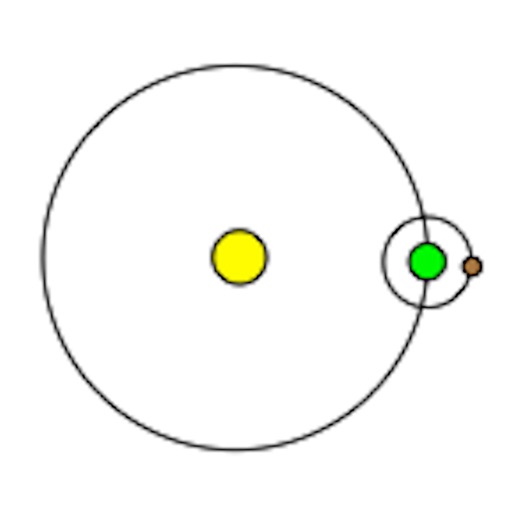
View planetary orbits and simulate motion to observe planetary alignment and movement. Adjust time speed to visualize scale and dynamics. Access data anytime for educational exploration.
Use phone sensors to measure magnetic fields, gravitational acceleration, and sound. Run preloaded experiments or create custom ones. Export raw data and results for analysis. Share experiments with others.