iPhone Screenshots


Description
Explore how develops inflatable spacecraft for atmospheric re-entry. Select materials and shapes to build a . Adjust trajectory to safely guide cargo through extreme heat. Simulate re-entry challenges and test design choices.
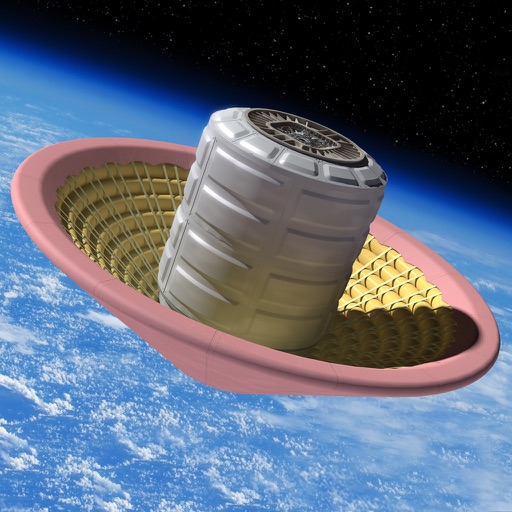
A giant cone of inner tubes stacked together may someday help cargo, or even people, land on another planet or return to Earth. NASA calls the spacecraft technology HIAD - Hypersonic Inflatable Aerodynamic Decelerator.
Learn the challenges NASA faces as it works to develop an inflatable spacecraft. Choose the right shape, materials and trajectory to use a HIAD to bring cargo back from space.
To successfully guide an inflatable spacecraft through the super heat of atmospheric re-entry requires the right stuff. If you inflate too early, your shape is incorrect or your material isn’t strong enough - you burn up. And if you get all that right and miss the target the mission is a bust.
Try your hand at landing a HIAD and become a rocket scientist. Advance through all stages at each of the four levels, collecting up to three stars for each successful landing.
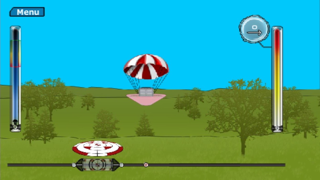
The HIAD game challenges players to successfully land a HIAD after launching from the International Space Station and arriving at a target ground point on Earth. To successfully reach the target, players must:
•Undock from the ISS and use thruster control to steer the spacecraft towards the desired de-orbit point
•Inflate the HIAD aeroshell to reduce velocity and protect the payload from the heat of atmospheric re-entry
•Steer the inflated HIAD to the ground target prior to parachute deployment, taking into account the prevailing winds
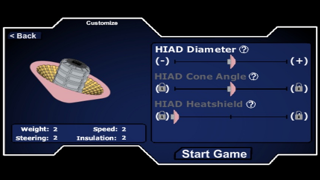
•Customize the HIAD vehicle to achieve different performance characteristics to improve results
FEATURES
•Multiple spacecraft configurations and options
•Speed and trajectory controls
•In-game introduction
•Four levels of engineering mastery
•Locked levels
•Scoring for each level
•Help section
•Links to related website