Solar systems, collect resources, defeat emery solars
Play as a God, collect GP and MP to expand solar system. Defeat enemy solars to gain resources. and customize freely. Manage resources to grow and upgrade space empire.
Explore celestial bodies in augmented reality. View planets, stars, and galaxies with interactive 3D models. Adjust settings to toggle sound, display names, pause animations, or reset positioning.
The app offers a 3D tour of the Universe guided by Professor Brian Cox. Users can explore celestial bodies, witness cosmic events, and access over 200 interactive articles and BBC videos.
The app provides an offline companion for the 13 Moon Dreamspell calendar. It allows users to view daily information, explore the calendar cycles, and study kin details.
The app offers marine tide information for US tide stations. It displays tide events, sunrise, sunset, moonrise, and moonset, with tide graphs and current predictions.
Teaches counting, sorting, and classification through interactive . Helps recognize constellations and understand water's origin. Includes memory matching and letter recognition activities. Encourages science learning about the universe and .
Astronomical objects and compare sizes from galaxies to atoms. Use gestures to zoom in and out, to microscopic levels or cosmic distances. View detailed comparisons and understand relative sizes visually.
Answer questions about geography and landmarks using map data. Locate features like cliffs, towns, and peaks. Check altitudes and distances. Find nearby campsites and mountain refuges. Identify glaciers, lakes, and celestial bodies on the map.
The app displays 3D globes of Jupiter's Galilean moons, Io, Europa, Ganymede, and Callisto. Users can explore over 680 named features, view their approximate phase, axial tilt, and central meridian, and search for specific features.
The app presents 3D globes of seven of Saturn's moons, including Titan and Enceladus. Users can zoom, spin, and tap labels for information on over 440 named features.
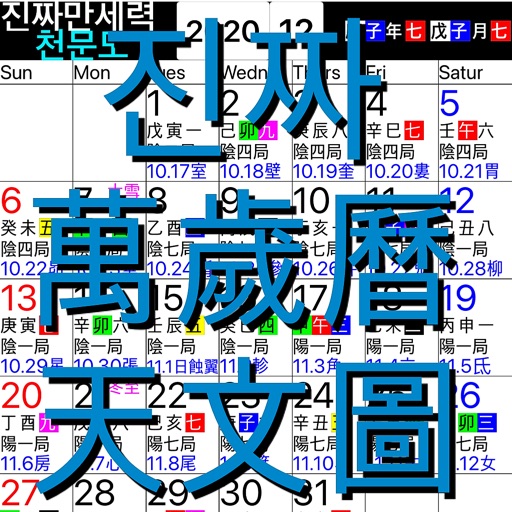
The app displays Gregorian calendar dates alongside lunar month/day numbers, sexagenary day units, and star letters. It also shows the 24 solar terms, new/full moon times, and eclipse occurrences.