Track flyovers of the International Space Station, Tiangong, and Hubble Space Telescope with 3D visualization and live positioning. Predict up to 30 days ahead with location-based pass times and a 0–4 star rating system for visibility.
View images and accompanying explanations from NASA’s Astronomy Picture of the Day. Save favorite photos to a personal collection. Access the full APOD archive dating back over 30 years. New images are available daily around midnight ET.
The app teaches children about the physics and astronomy of black holes. Users can explore what happens when falling into a black hole and learn about discovered black holes.
Stars and constellations with real-time sky maps. Locate celestial objects and track their movement. Identify planets and bright stars. Set location and time for accurate sky views. Save favorite stars and constellations for future reference.
The app provides a journey through the universe, from particles to distant galaxies. Users can learn facts about astronomy, biology, cosmology, and physics.
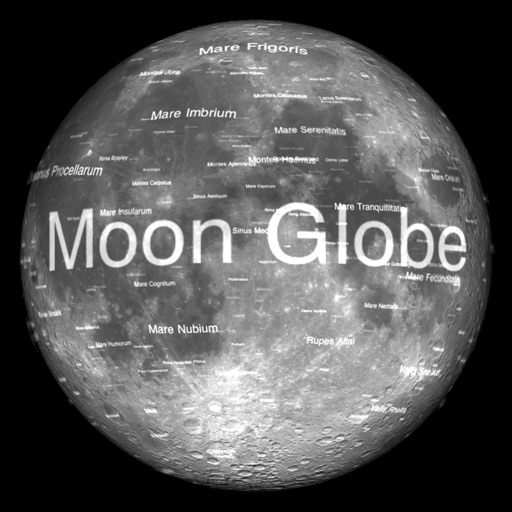
The app renders the Moon in realtime 3D using satellite imagery and topographic data. Users can manipulate the view, adjust sunlight, and see labeled terrain features and spacecraft.
The app simulates the night sky from any location on Earth, past or future. It includes over 120,000 stars, celestial objects, and photos, with optional audio narration.
View daily high-resolution astronomy images with accompanying explanations. Save and share favorite . Explore detailed information about celestial objects. Set reminders for new daily images. Organize and categorize images into personal collections.
Explore scientific concepts through interactive features that scale from subatomic particles to cosmic structures. Learn about metric and imperial units with visual comparisons. View detailed information on celestial bodies and microscopic elements.
Explore celestial bodies in augmented reality. View planets, stars, and galaxies with interactive 3D models. Adjust settings to toggle sound, display names, pause animations, or reset positioning.
Learn vocabulary through listening, speaking, reading, and writing. Classify words into categories like animals, colors, and numbers. View pictures for visual aid. Adjust play speed. Hear male and female pronunciations.