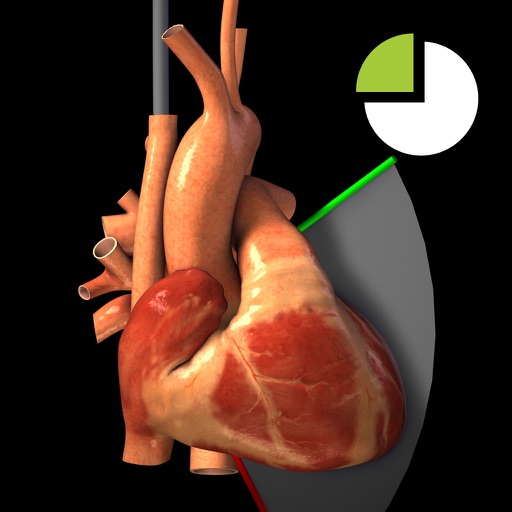
View TEE recordings for 20 diagnostic and corresponding 3D heart models. See TEE probe position and ultrasound plane alignment. Assess cardiac function through interactive visualizations.
by University Health Network★ 3.88 ratingsMedical$4.99Data updated 2026-09-08
The app provides 23 heart sounds with clinically relevant information. It includes details on location, description, etiology, pathophysiology, presentation, examination, evaluation, treatment, and links to external resources.
The app helps users learn the Quran by heart with a repetition pattern designed for retention. Users can configure repetitions and control playback speed for a personalized learning experience.
The app provides a visual 3D ballistic tool for practicing hunting situations up to 1000m. Users can practice with adjustable rifle scope, ballistics, and environmental variables, then analyze their hits.
Perform whole-body ultrasounds using a portable device. Connect to an iPhone for operation. Access user-friendly scanning controls and save images for review. Share scan results directly with healthcare providers.
Explore anatomical structures with 3D models. Rotate, slice, and zoom to view layers. Tap labels for descriptions, audio pronunciation, and close-ups. Quiz yourself or create custom quizzes on anatomy sections.
Access echocardiography data for LV/RV size and function, LV mass, aortic and atrial dimensions. View diastolic function and prosthetic valve reference data. Switch between BSE, ASE, and EACVI guidelines.
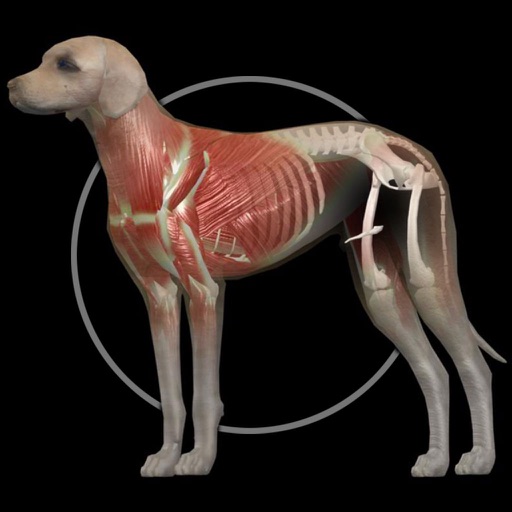
Veterinary RA provides ultrasound-guided nerve block techniques. Users can access landmark-based and infiltrational block methods. It includes neuraxial anesthesia protocols. Step-by-step guidance for major nerve blocks is available.
Navigate through a minimalist interstellar universe using gravity and wormholes to guide your probe between planets. Avoid obstacles and stars while exploring .
Monitor heart rhythm with ECG recordings. Analyze results for insights on cardiac health. Receive personalized feedback and recommendations. Share data with healthcare providers for review. Track trends over time to assess heart health changes.
Explore 3D and Augmented Reality models of the skull and intracranial structures. Access over 2500 anatomical labels with descriptions. Use three visualization tools to dissect, isolate, and explode structures along three axes.
Solve problems by snapping photos or uploading images. Receive step-by-step solutions with detailed explanations. Customize learning paths based on problem complexity. Track progress and revisit previous problems for review.
Smartphone movements to simulate ultrasound probe actions. Adjust imaging parameters and view real-time scans on a connected device. Save and review scan sessions for analysis and training.