Allows users to identify celestial objects by pointing their device at the sky. It uses GPS and device sensors to display stars, planets, constellations, comets, and meteor showers.
The app teaches letters, phonics, and spelling for ages 2-6. It includes over 100 words, 44 Dolch sight words, and four learning levels covering letter names, sounds, and spelling of four and six-letter words.
The app offers Japanese real voice pronunciation for over 8000 vocabulary words. It includes an intelligent quiz system with three modes and an achievements system for all JLPT levels.
View the night sky from any location and time. Rotate and zoom the star chart using multi-touch gestures. Identify over 16,000 stars with names for 254. Simulate atmospheric distortion and twinkling effects.
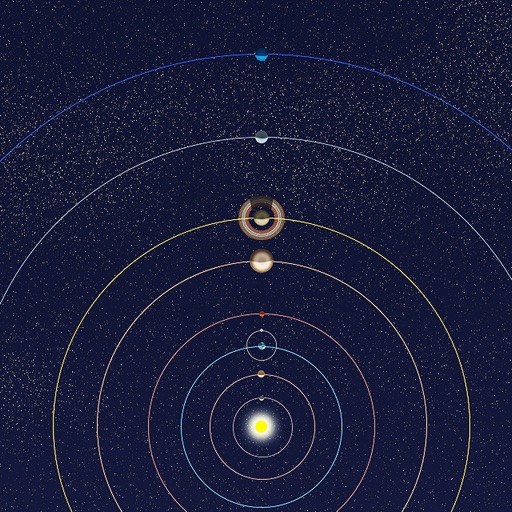
View positions of all solar system planets at any date. Adjust time to see real-time movements. Display accurate orbit sizes, eccentricity, and orbital shapes based on NASA data. Show realistic planet sizes relative to each other.
Explore interactive 3D models of the solar system and Earth's layers. Build a sundial and walk on the moon. Use augmented reality to visualize space concepts. Access 20 science projects with guided instructions.
Explore interactive physics simulations to learn about stellar evolution. Navigate cosmic environments to manipulate stars and avoid hazards. Complete challenges to form holes. Access a two-hour documentary on holes hosted by an astrophysicist.
University of California, Berkeley's Lawrence Hall of Science
Explore planets, track orbits, build models
Explore the with interactive activities like designing a Moon base and growing plants in space. Learn about planetary features, space travel, and life in space. Track celestial movements and conduct experiments to understand astronomy concepts.
Explore the differences between night and day through interactive gameplay. Tap to wake up animals, make birds sing, and color butterflies. Learn about natural changes with engaging activities and a fun, educational design.