The app provides an interactive database for stars and planets, showing a sky map based on user-selected time and location. It displays stars brighter than magnitude 9 and includes a database of Messier Objects and a Virtual Orrery.
by Geoffrey Domm★ 1.01 ratingsEducation$0.99Data updated 2026-10-14
View historical and future solar and lunar eclipses with detailed dates and times. Track visibility based on location. Learn about types and phases. Access sky maps for observing conditions. Save and share details.
The app provides practice for the USCIS Citizenship test, allowing users to select either the 2008 or 2025 questions and answers. It includes flash cards and practice tests to assess knowledge of US History and Government.
Explore high-resolution images of planets, nebulae, and galaxies. Navigate through the solar system and its major moons. Learn about the formation and evolution of celestial objects. Access a narrative on the origins of the universe by Dr. Aaron Day.
Create and simulate a custom with realistic physics. Adjust planet sizes, positions, and orbits. Explore 3D space environments and test gravitational interactions. Save and share custom solar systems.
Track and log sightings of 150 visible satellites with time and location details. Record observations and note when each was seen. Browse future passes in preview mode. Explore 9000 visible stars and major constellations with educational notes.
View video streams of Earth from the International Space Station. Watch continuous 24/7 footage. Access real-time imagery and satellite data. Adjust camera angles and zoom. Receive notifications about space events and launches.
Explore the night sky with a detailed star map, identify celestial objects, and view planetary details. Control telescopes via connected devices. Access interactive astronomy guides and historical sky data.
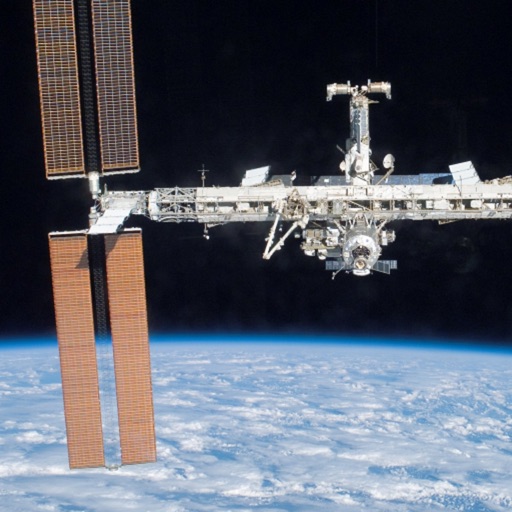
Track flyovers of the International Space Station, Tiangong, and Hubble Space Telescope with 3D visualization and live positioning. Predict up to 30 days ahead with location-based pass times and a 0–4 star rating system for visibility.
The app presents a journey through the solar system, featuring all eight planets. It includes facts, comments, and close-up images for each planet, along with animated orbits.
Explore the system with 3D models of the Sun, , moons, and space objects. Rotate and zoom to detailed features. Learn about space missions and planetary data. Tap to access facts and historical information.
Explore educational content with interactive space-themed planets featuring eBooks and activities. Complete quizzes and track progress via a dashboard. Designed for K-5 students, it includes privacy features and is free to download.
Explore a 3D globe with relief models and political and physical maps. View day/night cycles, time zones, and city lights. Access over 2,600 geographic objects and more than 500 wonders of the .
Explore celestial bodies in the and nearby stars with detailed location data in the Milky Way. Modify or add celestial objects to create custom systems. Simulate gravity and physics to recalculate orbits based on Newton's laws.
Astronomical objects and compare sizes from galaxies to atoms. Use gestures to zoom in and out, to microscopic levels or cosmic distances. View detailed comparisons and understand relative sizes visually.
Explore planets, track celestial events, simulate systems
Explore the with 3D models of planets, moons, and asteroids. Rotate and zoom objects for detailed views. Learn about celestial bodies through interactive encyclopedia entries.
Explore astronomical objects and topics with interactive 3D models and augmented reality features. Take quizzes with 300 questions across various difficulty levels. Learn about comets, the solar system, and galaxy clusters through immersive content.
The app provides a comprehensive view of stars, constellations, and deep space objects with photos. It offers 180-degree and 360-degree maps of the visible sky, along with a "track" view to identify celestial bodies by pointing a device.