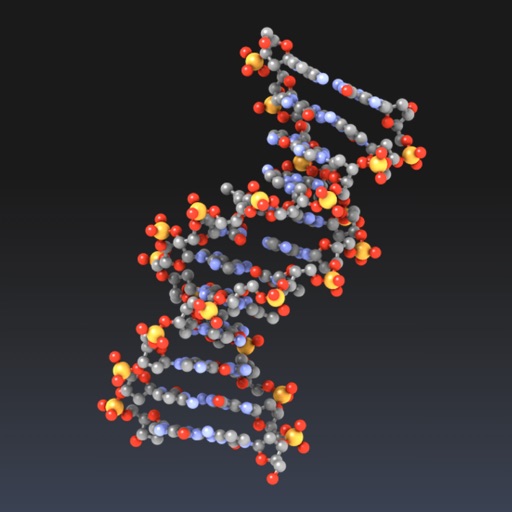
Explore molecular structures in 3D with intuitive gestures and customizable visualizations.
The app allows users to view and manipulate 3D molecular structures. It supports multiple visualization modes and file sharing options for molecular data.
Access formulas, equations, and reaction mechanisms for intermediate students. Add personal notes for revision. Covers physical, inorganic, and organic .
Access step-by-step textbook and explanations to understand complex problems. Search for solutions by subject or textbook. View detailed breakdowns of answers and ask experts for clarification. Save and revisit explanations for review.
Study and test knowledge of the 20 standard acids through customizable quizzes. Topics include names, structural formulas, 1-letter and 3-letter codes, codons, and side chain classes. Quizzes are available for free. Remove ads with an in- purchase.
The app presents over 180 structural formulas for hydrocarbons, covering major classes like alkanes, alkenes, and aromatics. It offers various game modes, including spelling quizzes and multiple-choice questions, to aid learning.
Solve , chemistry, and physics problems with step-by-step explanations. Save completed questions and in an directory. Share solutions via Print, SharePlay, or export. Collaborate with others in real time.
Access element data including atomic mass, density, melting and boiling points, atomic radius, and electronegativity. Tap elements to view Wikipedia pages for detailed information.
Recognize text in images or with camera. Translate words and phrases into over 20 languages. Look up definitions, pronunciation, and examples. Save notes and create flashcards for language learning.
Solve math problems step-by-step with detailed explanations. Input equations to see solutions. Learn algebra, functions, fractions, and graphs. Verify answers and track progress. Supports multiple math topics including linear and quadratic functions.
Learn organic chemistry by identifying and studying 25+ and 300+ compounds. Practice with multiple modes and customize study sets. View detailed structures and properties of each group.
Prepare for the ATI with practice questions, study guides, and an simulator. Track progress with adaptive questions that adjust to performance. Create personalized learning plans. Set goals and review weak areas.