Naming and writing formulas for ionic and molecular compounds, acids, bases, polyatomic ions, hydrocarbons, and organic functional groups. Choose between -to-name or name-to- exercises. Track progress and repeat exercises for reinforcement.
Learn and practice creating by selecting cations and anions. The generates correct formulas with proper subscripts and parentheses. Reinforce naming rules and charge balancing through interactive exercises.
Calculate and elemental composition for chemical formulas. Input formulas with subscripts, parentheses, and nested groups. Display total and individual element contributions. Perform elemental analysis for problem-solving and educational purposes.
The app provides practice in naming compounds and writing formulas. Practice categories include ionic and molecular compounds, acids, bases, polyatomic ions, hydrocarbons, and organic functional groups.
Learn to name compounds with interactive lessons on alkanes, cycloalkanes, alcohols, aromatics, and ketones. Complete quizzes after each lesson to test comprehension and reinforce learning.
Write chemical formulas and names for inorganic and organic compounds. Generate molecular formulas and IUPAC names instantly. View compound properties including structure, molecular weight, density, melting point, and boiling point.
Solve problems with a scientific calculator that handles standard and scientific notation with significant figure control. Calculate molar masses, convert between chemical names and formulas, and balance equations.
Solve chemistry problems with instant step-by-step solutions. Balance chemical reactions automatically. Receive detailed explanations for each step. Create and edit chemical equations with AI assistance. Share solutions and explanations with others.
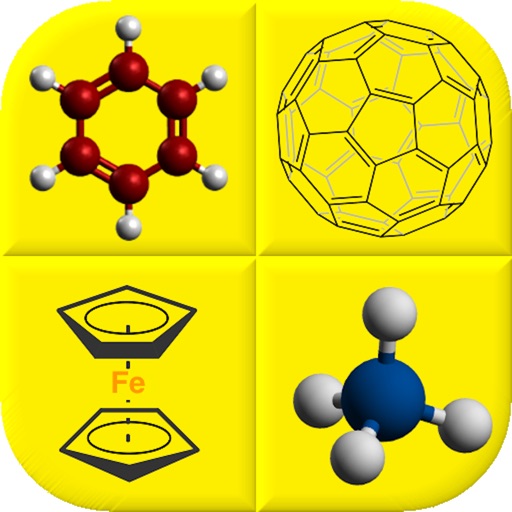
Learn with spelling quizzes and structure visuals. Identify formulas, names, and classifications. Explore organic, inorganic, and organometallic compounds. Choose between easy and hard difficulty levels.
Teach math and reading through interactive and lessons aligned with state curriculum standards. Children can practice numbers, letters, and basic concepts. Parents and teachers can track progress and access lesson plans.
Learn of organic and biochemical compounds through multiple choice quizzes. Identify systematic, trivial, or both names. Cover hydrocarbons, functional groups, biomolecules, sugars, nucleobases, vitamins, and amino acids. Works offline with no ads.
Allows users to create chemical process models using a touch-enabled PFD drawing interface. It supports offline operation and performs VLE/VLLE/SVLE/SVLLE calculations with equation of state and activity coefficient methods.
Click to advance , gain entropy, and unlock new species. Manage resources to build ecosystems. Track progress through geological time periods. Complete challenges to evolve life forms. Share achievements with friends.