Explore cell biology by zooming between whole cells and molecular details. Tap terms for AI-generated explanations tailored to your learning level. View concept chains that link related biological ideas.
Color pages come to life with augmented reality features. Users can scan pages to view animated content. Interact with educational themes through creative activities. Share finished artwork digitally.
1300+ interactive 3D scenes across history, science, technology, mathematics, and arts. Access digital lessons, images, videos, and audio resources. Take quizzes and complete activities to test knowledge.
Play word games by guessing and spelling on-screen images. Compete or collaborate with friends or AI characters. Use physical pieces to interact with the digital game. Track progress and unlock new challenges. Share achievements with others.
Explore interactive 3D models of reptiles, amphibians, tide pools, human anatomy, and the solar system using augmented reality. Tap to interact with models, view animations with sound, and access detailed content from printed materials.
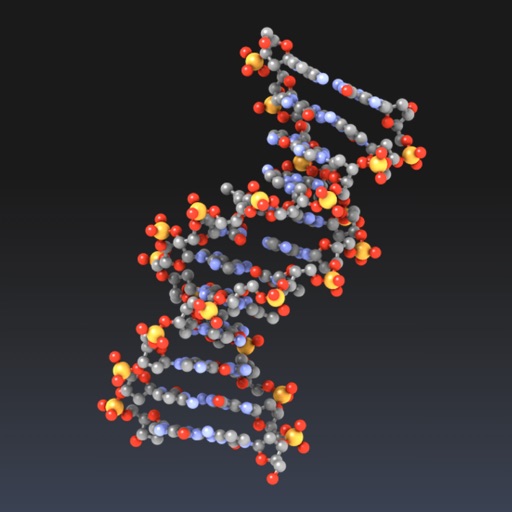
Explore molecular structures in 3D with intuitive gestures and customizable visualizations.
The app allows users to view and manipulate 3D molecular structures. It supports multiple visualization modes and file sharing options for molecular data.
Allows users to create chemical process models using a touch-enabled PFD drawing interface. It supports offline operation and performs VLE/VLLE/SVLE/SVLLE calculations with equation of state and activity coefficient methods.
Connect to student organizations, find campus activities, and check into events. View event details, RSVP, and receive updates. Login with Campus Connect credentials to access personalized content and manage participation.
Create and publish interactive educational posters with social media links. Share posters directly from the . Access teaching licenses for multi-user use. View detailed anatomical diagrams and 3D models.
Users can explore interactive lessons and training sessions in AR or VR. Engage in group or individual learning activities. Create content using mobile devices or headsets. Access a library of pre-built educational resources.
Explore 3D and Augmented Reality models of the skull and intracranial structures. Access over 2500 anatomical labels with descriptions. Use three visualization tools to dissect, isolate, and explode structures along three axes.
Model and visualize particles with realistic interactions and four distinct classes. Simulate natural phenomena like crystallization, thermodynamics, diffusion, and orbital mechanics.