View and analyze radiographic images to test knowledge of anatomy and pathologies. Identify structures and recognize abnormalities. Access images captured by faculty for self-assessment and learning.
Access learning content and exercises anytime, anywhere. Track progress and resume lessons from previous sessions. Learn new fire protection knowledge daily.
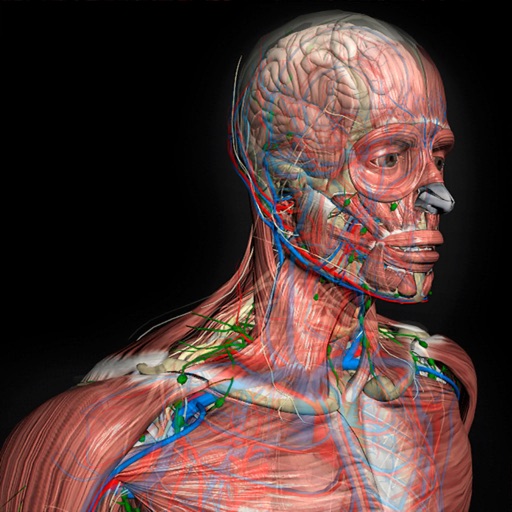
The app presents a three-dimensional model of human anatomy. Users can explore internal systems layer by layer or simultaneously, with options to highlight structures or remove them for deeper viewing.
Simulate hazardous gas training sessions wirelessly.
The app provides trainers with control over a simulated hazardous gas training environment. It sends simulated gas readings, custom messages, images, and questions to students, logging all activity for comprehensive session reports.
Manage golf handicaps using GHIN Index, Blue Tee Index, or Competition Tournament I. Input scores, calculate handicaps, and track progress. Share results and compare performance with other members.
The app is a calculation sandbox that combines calculator, spreadsheet, concept map, and programming language functions. It makes complex abilities accessible through explicit visual representations on a two-dimensional surface called the Aether.
Medical for health professionals in training. View lab reports with illustrated components and shorthand notation. Watch videos on lab interpretation techniques. Complete exercises with real lab results and associated conditions.
The app programs mathematical formulas with up to six variables. It plots graphs with respect to a chosen single variable or when all variables change along a user-prescribed vector.
Learn to name and identify 3D like cubes, cones, spheres, pyramids, cylinders, and rectangular prisms. Explore their properties through interactive games and activities. Sort, compare, and construct to reinforce understanding.
This app works with the SMART STAT patient simulator to help healthcare professionals practice assessment and decision-making skills. Users can control physiological parameters and program scenarios for realistic training without patient risk.