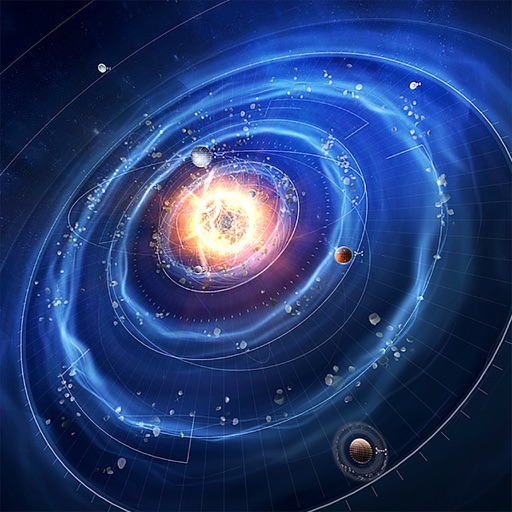
Explore celestial bodies in the and nearby stars with detailed location data in the Milky Way. Modify or add celestial objects to create custom systems. Simulate gravity and physics to recalculate orbits based on Newton's laws.
by WPC★ 4.53,560 ratingsGamesFreeData updated 2026-09-06
Explore interactive 3D simulations to how mechanical systems work. View a 4-stroke engine, car clutch, manual transmission, and disc brake in detail. Manipulate objects, observe internal mechanisms, and gain insights through visual learning.
Explore 3D models of Earth, Mars, and the Moon with detailed surface data. Navigate the planets, zoom in on features, and fly through orbit. View planets in VR with compatible headsets or on a standard device without additional equipment.
Explore 3D models of body systems including circulatory, digestive, integumentary, muscular, nervous, renal, reproductive, respiratory, and skeletal systems. Identify and label anatomical with accurate names.
Play by tapping to thrust and navigate through asteroid fields and gravity orbits. Survive escalating stages that increase speed and danger every 30 seconds. Avoid mistakes to stay alive.
View the positions of the Sun, Moon, and planets on an intuitive sky grid. Slide a time bar to forecast celestial appearances. Navigate without augmented reality or motion tracking.
Explore car systems through interactive 3D simulations. View detailed descriptions of key components. Engage in simulations to develop technical understanding. Use the suggest simulation tool to request custom content.
Compare observed celestial altitudes with live calculated values for precise navigation. Tap to pause and receive instant feedback. Access data for the Sun, Moon, Venus, Mars, Jupiter, Saturn, 57 navigational stars, and Polaris.
Johns Hopkins University Applied Physics Laboratory
Explore space missions and science instruments
Explore ’s mission with real-time imagery and a countdown. View spacecraft data, science instruments, and mission updates. Access educational resources, activities, and news articles. Sync with Apple Watch for quick updates.
Allows users to identify celestial objects by pointing their device at the sky. It uses GPS and device sensors to display stars, planets, constellations, comets, and meteor showers.