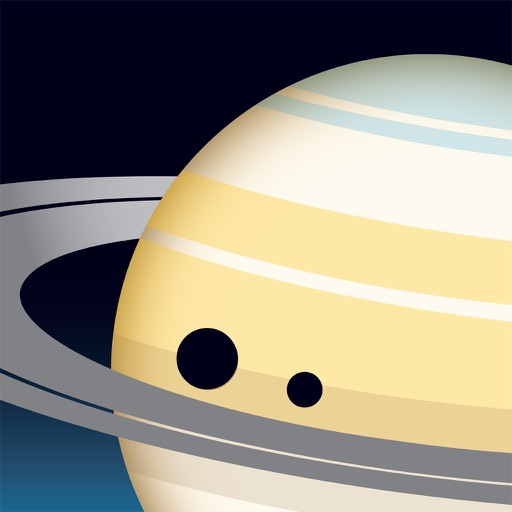
The app guides users to Saturn’s largest moon, Titan, and its nine largest moons. Users can step through time to see moon positions and view an encyclopedia with images of Saturn’s moons.
by American Astronomical Society (inc)★ 5.01 ratingsEducation$2.99Data updated 2026-10-10
View real-time night sky and identify celestial objects. Locate planets, the moon, and stars based on your location. Learn about solar system planets with detailed information. Track moon phases and planetary positions.
The app offers a scientific calculator with complex number support and programmable keys. It includes graphing capabilities for up to nine equations, vector and matrix calculations, and a unit converter for various measurements.
Explore 3D models of Earth, Mars, and the Moon with detailed surface data. Navigate the planets, zoom in on features, and fly through orbit. View planets in VR with compatible headsets or on a standard device without additional equipment.
This interactive sci-fi tale for children aged 6-8 years old features colorful graphics and funny characters. Users can read or listen to the story in multiple languages and record their own voice-overs.
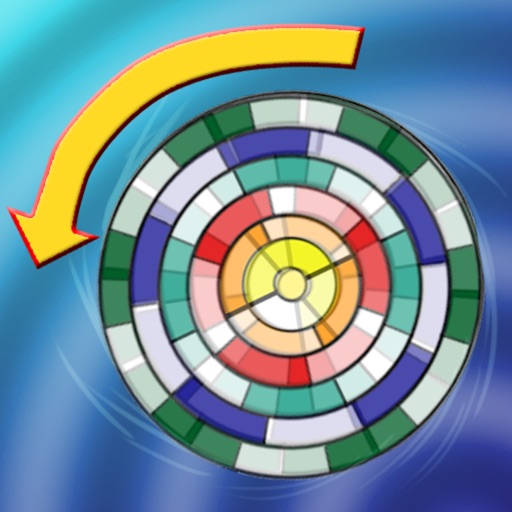
Explore the by rotating four objects clockwise or counterclockwise. Adjust speed to observe when objects appear stationary or reverse. Select a wheel with colored segments to analyze visual patterns during rotation.
"Answer multiple-choice questions about beliefs, practices, and history. Track progress and review correct answers. Access explanations for each question."
The app presents a 3D globe of the Moon with interactive controls for manipulation. Users can explore named features, view current moon phases, and access information about lunar topography.
Simulate the Apollo Guidance Computer interface with a realistic keyboard layout. Tap the 'i' icon for help. Navigate through mission scenarios, input commands, and view system status displays as used during Apollo missions.
Teach basic facts through interactive games. Practice addition, subtraction, multiplication, and division. Focus on 1 to 12. Track progress and repeat exercises for reinforcement. Suitable for children aged 4 to 9.
University of California, Berkeley's Lawrence Hall of Science
Explore planets, track orbits, build models
Explore the with interactive activities like designing a Moon base and growing plants in space. Learn about planetary features, space travel, and life in space. Track celestial movements and conduct experiments to understand astronomy concepts.