The app guides users to Saturn’s largest moon, Titan, and its nine largest moons. Users can step through time to see moon positions and view an encyclopedia with images of Saturn’s moons.
by American Astronomical Society (inc)★ 5.01 ratingsEducation$2.99Data updated 2026-10-10
View from NASA's Jet Propulsion Laboratory, including planets, stars, and technology. Set up widgets for slideshow displays. Access weekly updates. Explore detailed imagery of celestial bodies and missions.
Children can color and draw with themed pages to develop fine motor skills. The includes drawing lessons, interactive characters, and sound effects. Users can switch between themed packs and save progress.
The app presents over 960 images from NASA's Cassini orbiter, detailing Saturn, its rings, and over 20 moons. Users can explore this collection with multiple navigation options and access additional information for each image.
Track lunar phases, moonrise and moonset times, and eclipse predictions. View detailed maps and surface features. Adjust settings for photography with exposure and focus guides. Access astronomical data and cultural lunar calendars.
Access + videos without a subscription. View over 21,000 latest images. Explore mission details and news. Listen to podcasts. Use augmented reality to interact with space content. Track live coverage and on-demand series.
Explore the solar system with real-time planetary motion tracking. Switch perspectives to view the system from any planet's vantage point. Tap on planets to access detailed characteristics and learn about their features.
View celestial objects using augmented reality. Point device at sky to identify stars, planets, and constellations. Access detailed information and historical data. Sync with GPS for accurate positioning. Explore 3D models of celestial bodies.
Build and customize rockets to explore a realistically scaled universe. Navigate using real orbital mechanics and travel to distant planets and objects. Interact with Mercury, Venus, Earth, the Moon, Mars, Phobos, and Deimos.
The app presents a 3D model of the solar system, allowing interaction with planets, moons, and other celestial bodies. Users can observe objects in real time, make virtual flights, and travel through time to view the universe at different periods.
Identify , , and constellations by pointing the phone skyward. View real-time sky maps with overlays. Learn about celestial objects and satellites. Set location for accurate sky display. Save favorite constellations and .
Explore the system with 3D and augmented reality views. Rotate and zoom in on planets and moons. Learn about planetary features and orbits. Access detailed facts and scientific data. Share observations and screenshots.
Explore celestial objects like planets, moons, asteroids, and stars. View detailed information about each object. Track their positions and movements over time. Learn about constellations and their changes throughout the year.
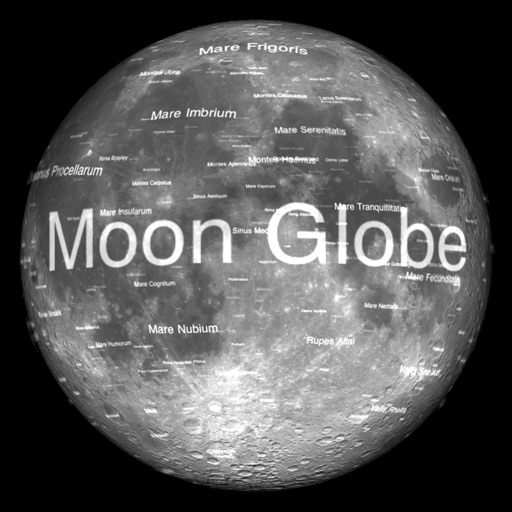
The app renders the Moon in realtime 3D using satellite imagery and topographic data. Users can manipulate the view, adjust sunlight, and see labeled terrain features and spacecraft.
Explore celestial objects with detailed star maps and constellation guides. View 5 million stars and 5,000 years of eclipses. Track planets, moons, and Messier objects. Receive on-device recommendations based on location and time.
Access celestial objects with a comprehensive database of comets, asteroids, and solar system bodies. Plan and log observations, control telescopes, and track accurate positions. View detailed sky maps and receive real-time updates.
Explore the solar system by visiting planets like Mercury, Venus, Earth, Mars, Jupiter, Saturn, Uranus, and Neptune. Rotate planets, zoom in on surfaces, and launch meteorites through the atmosphere.