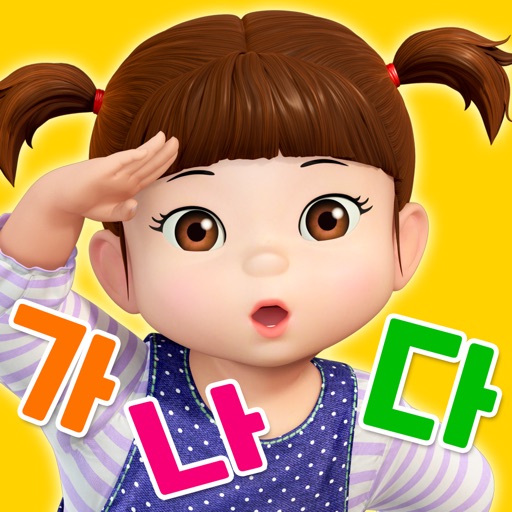
The app helps children learn Korean through play and rewards. It offers step-by-step learning with over 200 basic words and sound words, designed for intuitive use by children.
by Jinguk Hong★ 0.00 ratingsEducationFreeData updated 2026-09-28
The app offers a personalized learning environment with features like a simplified home screen and an enhanced video player. It provides AI-driven course recommendations, personalized curriculum, and a detailed learning status overview.
Learn English words with daily spaced repetition and progress tracking. Test knowledge through quizzes and fill-in-the-blank exercises. Hear word pronunciations, view example sentences, and search for specific terms.
The app offers English conversation courses tailored for Korean speakers. It covers phonics, common phrases, essential grammar, and dialogue practice using sitcom scripts and real-life scenarios.
The app provides English-Korean, Korean-English, and English-English dictionaries. It includes a large number of headwords, idioms, and example sentences.