Apps Like Lange Anatomy Flash Cards for iPhone and iPad
Study with interactive quizzes and tests
Explore detailed, fully labeled color images of human . Take quizzes and tests to reinforce learning. Access interactive features to study structures and functions. Review content anytime on iPhone, iPad, or iPod touch.
by Usatine & Erickson Media LLC★ 5.01 ratingsMedical$19.99Data updated 2026-09-08
Explore 3D anatomical models with interactive layers and systems. View structures by body parts or organs. Access over 6,000 labeled anatomical objects. Study for exams and tests. Navigate through realistic human body visualization.
Explore musculoskeletal with interactive flash cards featuring 144 muscles, 61 bones, 50 joints, and 64 movements. Pin locations for muscles, bones, and landmarks. Navigate through detailed anatomical structures for study or client education.
Learn anatomical structures through interactive modes. Choose It mode highlights structures for identification with multiple-choice questions. Touch It mode requires locating and touching specific structures on anatomical images.
Explore 3D human anatomy models with interactive touch controls. Rotate and zoom for detailed views. Perform virtual dissections to reveal muscle layers and anatomical structures. Take 3D location quizzes to test knowledge.
Explore detailed X-ray images with intuitive labels and in-depth explanations. Take interactive quizzes to test knowledge and track progress. Learn through structured lessons and visual references.
Explore 3D human models with interactive rotation and zoom. Perform virtual dissections to reveal layers and structures. Watch over 100 muscle action movies and physiology animations. Use audio pronunciation for anatomical terms.
View detailed anatomical structures of the brain, neck, thorax, heart, abdomen, pelvis, and extremities. Access multi-planar reformatting views including coronal sections. Navigate through layered imaging data for precise diagnostic analysis.
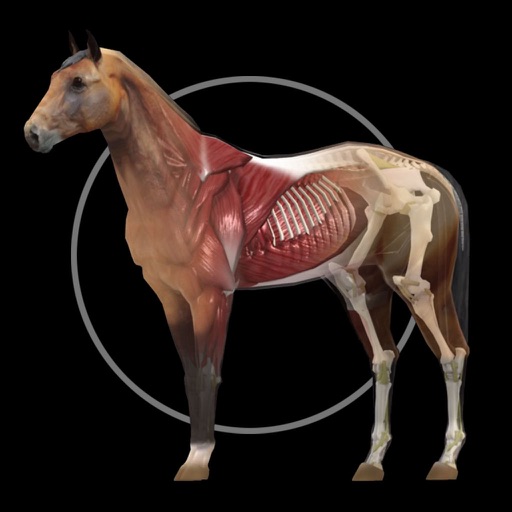
The app presents a 3D model of horse anatomy, including muscles, bones, and organs. It features detailed models of the hoof, head, and pelvis, with labeled structures and audio pronunciations.
Explore with interactive 3D models of male and female bodies. View cadaver and diagnostic images alongside 3D structures. Access key organ views and animations. Purchase additional physiology and dental content.
Explore anatomical structures with 3D models. Rotate, slice, and zoom to view layers. Tap labels for descriptions, audio pronunciation, and close-ups. Quiz yourself or create custom quizzes on anatomy sections.
Explore 3D human models with interactive rotation and zoom. Remove layers to view internal structures. Take 3D quizzes to test knowledge. Toggle visibility of systems.
Learn human through interactive quizzes and image identification. Study 3,500+ anatomical structures, ECGs, and pathology images. Practice in 24 body areas. Compete with other students globally. Access content offline.
Access courses, videos, and practice questions for -RN, -PN, and classroom exams. Track progress, review notes, and take quizzes to prepare for assessments. Sync study sessions across devices.
Learn anatomical structures through and quizzes. Study with beginner-friendly content. Track progress and set learning goals. Review key terms and definitions. Test knowledge with interactive challenges.
For exams with video lessons, multiple-choice quizzes, and spaced repetition questions. Access free content including daily quizzes and popular videos. Subscribe for unlimited access to all materials.
View detailed anatomical images with labeled structures. Access descriptions of anatomical features. Explore correlations for real-world applications. Study using a regional approach aligned with textbooks.
Access video lectures and integrated quizzes for studies. Review a comprehensive concept library. Prepare for USMLE, COMLEX, NBME, MCAT, and MBBS exams. Track progress with subject-specific content and exam simulations.
Explore detailed 3D human models with over 11,000 anatomical structures. Study skeletal, muscular, and vascular systems. Use AI-assisted flashcards, study notes, and expert videos. Annotate and label structures. Save and share notes.
Learn anatomy through x-ray, CT, MRI, and ultrasound images. Identify normal structures and common pathologies. Practice clinical reasoning and test imaging test selection. Track progress with structured curriculum based on training.