The app provides detailed information on chemical elements, including atomic number, mass, and properties. It features a molar mass calculator and interactive visualizations, all accessible offline.
by Merck KGaA (Darmstadt, Germany)★ 4.7123 ratingsEducationFreeData updated 2026-09-14
Learn about quantum mechanics concepts like atomic orbitals and quantum numbers. Explore electron behavior in atoms. Visualize probability distributions and energy levels. Track quantum number properties and their effects on electron configuration.
Access across seven categories including mechanics, electricity, and thermodynamics. Calculate problems using input data. View constants and for study or work reference.
Calculate pool chemical dosages based on water chemistry and LSI balance. Measure and adjust pH, alkalinity, and calcium hardness. Estimate pool volume and watch instructional videos. Access a user-friendly interface for accurate chemical balancing.
Build and view molecules in 3D. Visualize orbitals and symmetry elements. Look up chemical information and properties from external databases. Access computational chemistry programs. Perform molecular modeling and analysis.
Access bite-sized of non-fiction books. Read key insights in minutes. Save time by skipping lengthy content. Learn practical life, career, and relationship advice. Track progress and revisit notes. Share with others.
Explore a complete periodic table with detailed element data such as atomic weight, electron configuration, and electronegativity. Use color-coded categories to quickly identify element types.
Convert units for length, weight, volume, temperature,
Convert units for length, weight, width, volume, velocity, temperature, and pressure. Select the desired and perform conversions. Use tabs to switch between categories. Input values and receive converted results.
The app provides a periodic table, molar mass calculator, and chemical equation balancer. It also includes tools for trigonometry, measurement conversion, and solving various types of equations.
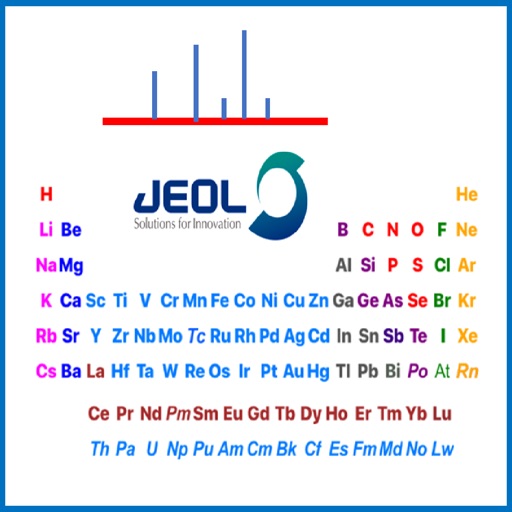
Reference allows users to select between mass spectrometry, energy-dispersive x-ray spectroscopy, or nuclear magnetic resonance spectroscopy tables. Clicking on elements shows method-specific information about stable isotopes.