

Apps Like Basic Math for iPhone and iPad
Practice foundational math skills repetitively.
The app offers exercises for basic math skills like addition, subtraction, multiplication, and division. It targets children under 12 and adults, with difficulty levels adjusted for age.
Basic Math screenshots
Ranked alternatives
Showing 561–580 of 1,000 ranked alternatives.


MultiPlyer
Andrey Levchik
Check arithmetic skills with examples.
The app checks arithmetic skills by presenting examples for users to solve. Users can select various modes for multiplication, division, addition, and subtraction, with options for automatic progression and custom number selection.


Princess Learns Math for Kids
FAMILY PLAY PTE. LTD.
Build math skills through fun games.
The app offers interactive math games for children aged 3 to 6, covering counting, addition, subtraction, and matching. It adjusts difficulty and allows focused practice on specific skills.


ZOMBIE MATHters
Naomi Sato
Solve math problems and defeat zombies
Practice math problems in addition, subtraction, and multiplication. Compete on global leaderboards. Track progress and set challenges. Includes parental guidance for educational value.


FlowMath
PalaSoftware Inc.
Build math problems to match answers.
The app presents math problems where users create equations to match a given answer. Users select numbers and operators to solve randomized problems.

MintyBrain: Math Arcade
MintyBrain, Inc.
Learn through interactive visuals
Learn facts through interactive games that focus solely on concepts. Practice addition, subtraction, multiplication, and division. Track progress with visual feedback and adjust difficulty levels. Share achievements with parents or teachers.

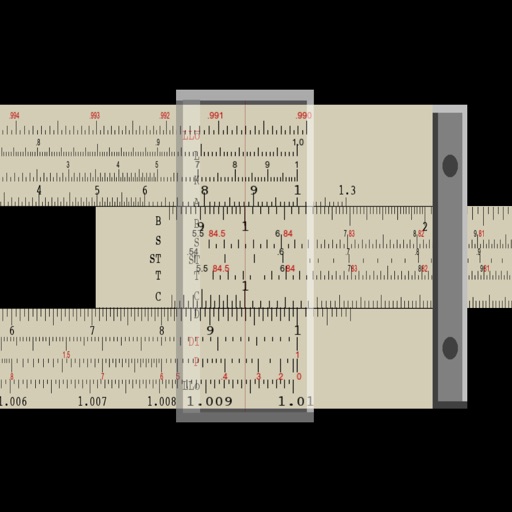
SlipStick
Steve Glenner
Calculate with a slide rule
Perform multiplication, division, logarithmic, and trigonometric calculations using a slide rule interface. Adjust scales for precise measurements. Manual operation requires sliding components to compute results.


How we rank alternatives
Apps are ranked by functional similarity, category fit, rating confidence, and popularity.