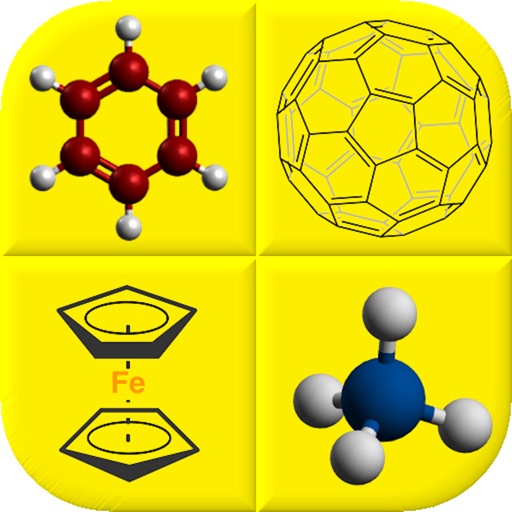
Build and view molecules in 3D. Visualize orbitals and symmetry elements. Look up chemical information and properties from external databases. Access computational chemistry programs. Perform molecular modeling and analysis.
Learn with spelling quizzes and structure visuals. Identify formulas, names, and classifications. Explore organic, inorganic, and organometallic compounds. Choose between easy and hard difficulty levels.
Access across seven categories including mechanics, electricity, and thermodynamics. Calculate problems using input data. View constants and for study or work reference.
The app offers over 6,000 words with images, phonetic transcriptions, and native speaker pronunciations. It includes 15 thematic topics, 140 subtopics, and 7 vocabulary games for learning.
Explore elements through 3D models and augmented reality. Tap to rotate elements and view their properties. Access detailed information about atomic structure and chemical behavior. Sync with educational resources for in-depth learning.
Solve problems by typing or scanning equations. Receive step-by-step explanations and solutions. Cover topics including mechanics and thermodynamics. Learn concepts through detailed breakdowns and examples.
Access formulas for Physics, Chemistry, and Maths including Algebra, Analytical geometry, and Differential equations. Search and locate formulas quickly. Sync across iOS devices with device-specific UI. Update content regularly with new formulas.
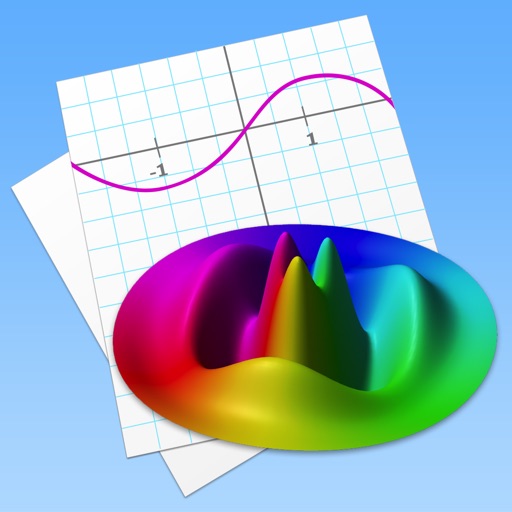
Allows users to plot functions, implicit relations, and parametric curves. It supports 3D graph visualization in AR. Features include inequality plotting, vector fields, and coordinate transformations.
View population growth projections for all countries under various scenarios. Track current and future overshoot levels. Explore sustainable population limits. Access country-specific solutions to . Compare demographic trends and resource impacts.
Allows users to access and monitor iPhone sensors like GPS, accelerometer, gyroscope, and barometer. View real-time from each . Export readings as CSV files. Create custom combinations and visualize graphs.
Learn vocabulary through listening, speaking, reading, and writing exercises. Classify words into categories like animals, colors, and numbers. Adjust play speed and receive voiceprint feedback to improve pronunciation.