View celestial positions including sun and moon overhead locations, daylight coverage, and moon phases. Track rise and set times, parallactic angle, and lunar liberations. Display day and night maps in an azimuthal projection.
by Othman Alzahrani★ 4.8119 ratingsEducation$3.99Data updated 2026-10-28
Capture photos of the moon by aligning the camera manually. Adjust moon size with two fingers. Tap to autofocus or manually adjust focus. Modify brightness using +/- buttons for better detail. Press the circular button to take a photo.
Navigation provides perpetual almanac and star finder chart with animation. Calculates lines of position, object data, and meridian passage. Supports running fixes and astronomical position calculations with multiple star observations.
The app provides information on weather concepts and terminology. It explains thousands of topics using graphics and animations, and includes a glossary and trivia.
The app displays tide times, light times, sunrise/sunset times, and moon phases for over 3200 locations. It does not require an internet connection, allowing users to view data anywhere.
View from NASA's Jet Propulsion Laboratory, including planets, stars, and technology. Set up widgets for slideshow displays. Access weekly updates. Explore detailed imagery of celestial bodies and missions.
The app displays a 3D globe of Venus with topography shown in false color. Users can manipulate the globe with gestures, view labels that appear with zoom, and access information about features.
The app visualizes recent Earth Science satellite data including temperature, carbon dioxide, and sea level variations. Data sets are presented using false color maps with color-coded legends to indicate environmental conditions.
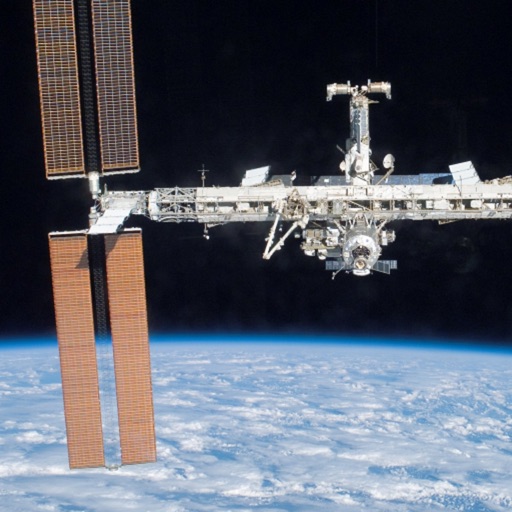
Track and log sightings of 150 visible satellites with time and location details. Record observations and note when each was seen. Browse future passes in preview mode. Explore 9000 visible stars and major constellations with educational notes.
The app allows users to explore the universe by pointing their device at the sky. It displays stars, constellations, and deep sky objects with graphics.