Test knowledge of rocket models and manned by guessing space research vehicles. Answer questions with hints provided. Track progress through 30 launch vehicles and 10 manned space ships. Learn about 40 research vehicles with educational content.
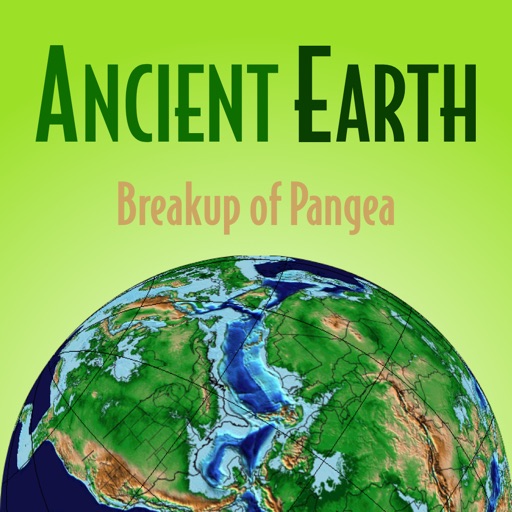
Explore geological timelines with interactive maps showing continent movements. View animations of Pangea breakup and mountain formation. Learn about key events in history through detailed illustrations and timelines.
Explore exoplanets with detailed descriptions and visualizations. Navigate through 180 trillion square light years of space. Switch between 6 travel modes for different exploration perspectives. Learn about planetary systems and celestial bodies.
Connect with other members to discuss space exploration, share astrophotography and creative work, attend weekly events, take online classes, and advocate for space missions.
The app provides daily science and technology news stories covering physics, space, biology, and more. Users can bookmark and share articles, with a free version offering limited content and a subscription unlocking full access.
Explore 3D models of Earth, Mars, and the Moon with detailed surface data. Navigate the planets, zoom in on features, and fly through orbit. View planets in VR with compatible headsets or on a standard device without additional equipment.
Explore the solar system with real-time planetary motion tracking. Switch perspectives to view the system from any planet's vantage point. Tap on planets to access detailed characteristics and learn about their features.
Explore the universe's creation through interactive mixed reality experiences. Navigate through cosmic events like star formation and solar system development.
University of California, Berkeley's Lawrence Hall of Science
Explore solar phenomena with hands-on activities
Explore the Sun through 15 hands-on activities. Measure the Sun's size, create solar ovens, and study shadows in Moon craters. Learn about solar energy and Earth's relationship with the Sun through interactive experiments.