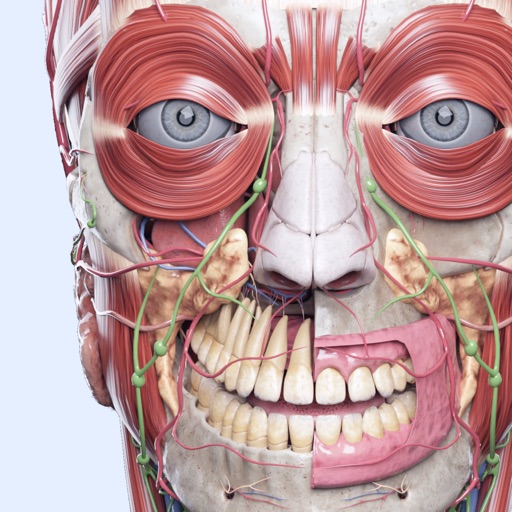
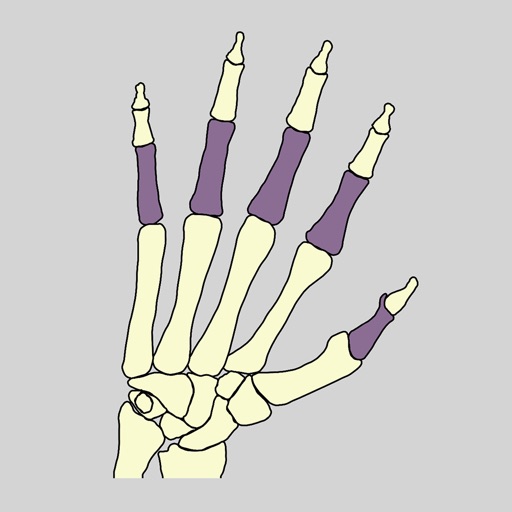
Explore 3D models of human bones and skeletal muscles. Tap to view detailed descriptions of each body part and its function. Learn about anatomy for medical students, professionals, fitness trainers, and anatomy enthusiasts.
by Philip Gossweiler★ 5.02 ratingsMedicalFreeData updated 2026-09-06
Explore 3D human anatomy models with interactive touch controls. Rotate and zoom for detailed views. Perform virtual dissections to reveal muscle layers and anatomical structures. Take 3D location quizzes to test knowledge.
Explore 3D human models with interactive rotation and zoom. Perform virtual dissections to reveal layers and structures. Watch over 100 muscle action movies and physiology animations. Use audio pronunciation for anatomical terms.
Study human with detailed illustrations of organs, bones, and muscles. Explore individual systems like the ear, heart, and eye. Learn Latin medical terminology. Access interactive content for medical education and general knowledge.
View 3D rotational models of human . Watch muscle action movies. Access 1247 Gray's images. Highlight muscles with a tool. Display Latin names and full descriptions. Available in English, French, Spanish, and German.
Explore the body with 3D models of the skeleton, organs, and muscles. Use voice search to identify body parts. Access detailed information about the skull and bones. Take quizzes on skeletal, organ, and muscular systems.
Explore 3D models of the skeletal system and other anatomical structures. Rotate, zoom, and view detailed textures up to 4K resolution. Access free content with in- purchases unlocking additional materials.
Interactive 3D anatomy models allow users to rotate and view muscle groups and bones. Track workout progress with exercise logs and performance metrics. Access detailed exercise guides with form feedback and biomechanical explanations.
View 3D models of human and pathologies. Rotate, zoom, and examine structures from any angle. Explore detailed digestive system models and rare diseases. Access medically accurate information for learning and reference.
Test knowledge of and with multiple-choice quizzes. Review detailed explanations for each answer. Track progress through various topics including muscles, bones, and body systems. Play challenging games to reinforce learning.
Explore detailed 3D models of the skeletal and musculoskeletal systems. Rotate models for 360-degree views. View bones in anterior, lateral, and posterior perspectives. Identify eight layers of muscles with clear labels.
Learn human anatomy by identifying through interactive quizzes. Tap to learn mode displays bone names and requires tapping the correct bone. Spin to learn mode shows highlighted for identification.
Explore musculoskeletal with interactive flash cards featuring 144 muscles, 61 bones, 50 joints, and 64 movements. Pin locations for muscles, bones, and landmarks. Navigate through detailed anatomical structures for study or client education.
Learn anatomical structures through and quizzes. Study with beginner-friendly content. Track progress and set learning goals. Review key terms and definitions. Test knowledge with interactive challenges.
Learn anatomical structures through interactive modes. Choose It mode highlights structures for identification with multiple-choice questions. Touch It mode requires locating and touching specific structures on anatomical images.
Explore 3D anatomical models with interactive rotation and labeling. View detailed cross-sections and layers. Access structured learning modules and quizzes. Save custom study notes and share annotations.
Study with interactive meridian pathways and point locations. Explore a customizable anatomy model with muscles, bones, and organs. Edit and save detailed descriptions of points, meridians, and models. Search by point name, function, or indication.
Explore with interactive 3D models of male and female bodies. View cadaver and diagnostic images alongside 3D structures. Access key organ views and animations. Purchase additional physiology and dental content.
Explore 3D models of body systems including circulatory, digestive, integumentary, muscular, nervous, renal, reproductive, respiratory, and skeletal systems. Identify and label anatomical with accurate names.