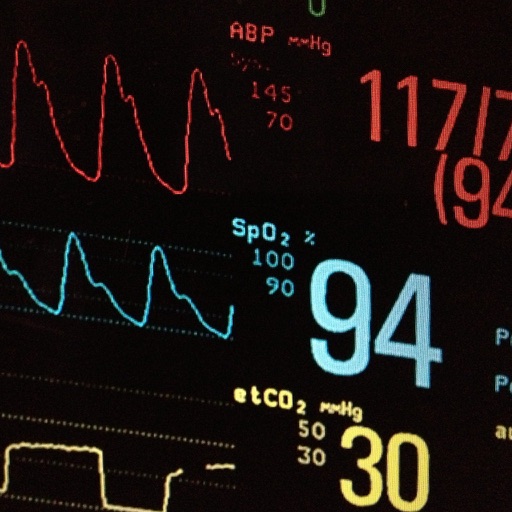
The app transforms an iPad into an ECG rhythm generator, defibrillator, and patient monitor simulator. It offers 35 pre-set scenarios and allows users to create custom ones, displaying 25 common rhythms and 20 chest X-rays.
Access medical and hospital data for Pennsylvania responders and professionals. Search for PA Medic information, view state-specific guidelines, and use dark mode for night shifts. Update in real time and access critical care resources.
Prepare for the exam with tests that mirror the actual exam format. Use smart flashcards to review key concepts. Access real-time pass rate predictions to gauge performance and focus study efforts effectively.
Prepare for the Technician Certification with over 1000 practice questions. Take mock exams to test knowledge. Topics include pharmacology, law and regulations, compounding, medication safety, and more.
Review and answer practice questions with detailed explanations. Access real-world scenarios developed by EMS professionals. Track personal progress with customized reports.
Study with 1500+ exam-like questions covering anatomy, kinesiology, pathology, and techniques. Use flashcards to reinforce memory. Access exams to prepare for certification tests.
Study for the Certified Ophthalmic Executive exam with over 300 practice questions. Review topics including General Ophthalmic Knowledge, Financial Management, Operations, Information Technology Management, Human Resources, and Risk Management.
Study for the with interactive quizzes covering all tested topics. Review detailed explanations for correct answers. Track progress with performance analytics and simulations. Access downloadable study guides and flashcards for on-the-go review.
Study for the II with exam-like questions covering all topics. Track progress with high-yield results. Access 680+ vignettes for practice. View performance metrics to identify strengths and weaknesses.
Take tests aligned with exam objectives. Identify weak areas and focus study sessions. Review detailed explanations for each question. Track progress over time to improve performance. Prepare for the actual with realistic scenarios.
Calculate arterial blood gas results with built-in formulas and reference ranges. Input pH, PaCO2, and HCO3- values. Interpret results with clinical guidelines. Generate reports and save patient data. Share findings with healthcare professionals.
Prepare for and exams with detailed study materials and practice questions. Review core concepts in critical care transport. Track progress with quizzes and assessments. Access flashcards and reference guides for quick revision.