Access critical care guidelines, podcasts, and articles anytime. Retrieve sepsis quality improvement resources and clinical recommendations. Stay updated with new guideline implementation tools and content additions.
Access charts, upload photos, and update schedules
Access patient schedules and charts remotely. Upload and view photos. Take quick notes and update records. Perform hospital rounds and access schedule changes. Share documentation securely.
Provides likelihood ratios for clinical diagnosis. Users input patient symptoms and test results to refine differential diagnoses. Integrates with open-source reference data for evidence-based decision support.
Access drug and disease information, lab test values, and clinical calculators. Calculate infusion rates by inputting values. View sample content for free; purchase to unlock full features.
Teaches children about use through educational content. Explains body functions, bladder care, and the role of the brain and kidneys. Provides instructions for self-catheterization and encourages independence.
View individualized patient care data. Calculate Delivered Oxygen during cardiopulmonary bypass. Access educational event calendars. Retrieve information on CPB and ECC therapies. Reference evidence-based guidelines.
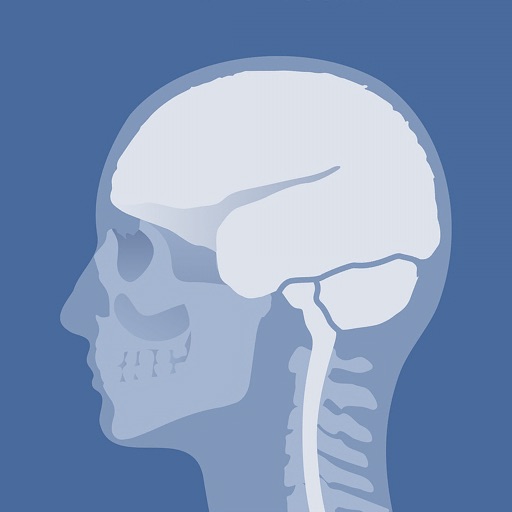
Explore 3D and Augmented Reality models of the skull and intracranial structures. Access over 2500 anatomical labels with descriptions. Use three visualization tools to dissect, isolate, and explode structures along three axes.
Access clinical trials in neurology subspecialties including stroke, epilepsy, dementia, headache, movement disorders, neuromuscular, neuro-oncology, and neuroimmunology.
The app simulates drug distribution using mathematical models and TCI pump behavior. It calculates infusion rates to maintain target effect site concentrations, implementing pharmacokinetic models for 11 drugs and 40 models.
The app provides commonly used neurology and neurosurgery grading scales. It includes scales for strokes, subarachnoid hemorrhage, intracerebral hemorrhage, coma, cognitive function, and more.