Calculate reactions with built-in equations and thermodynamic data. Convert units for pressure, temperature, and concentration. Solve material and energy balance problems. Access property tables for gases and liquids.
Convert units across , engineering, and everyday categories. Perform calculations with built-in formulas. Save frequently used conversions. Toggle dark mode. Switch between languages. Provide feedback for improvements.
Check current with details like temperature, humidity, visibility, pressure, precipitation chance, and storm alerts. View 5-day forecasts with daily conditions. Plan activities based on accurate data.
Track solar and lunar events with location-specific details. Zoom timeline to view celestial movements at different scales. Add notes and reminders directly on the timeline. Watch the Sun, , and ' positions and movements.
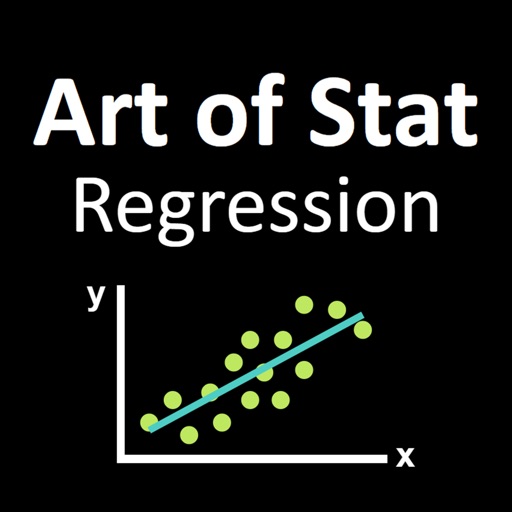
Create scatterplots and fit simple or multiple linear, logistic, or exponential models. Display standard errors, confidence intervals, and P-values for model parameters. Include categorical predictors and two-way interactions.
Explore a 3D map of the Milky Way, Andromeda, and their satellite galaxies. Navigate through the Orion Arm to view nebulae and supernovae. Fly through planetary atmospheres and land on planets.
Explore interactive 3D models of the solar system and Earth's layers. Build a sundial and walk on the moon. Use augmented reality to visualize space concepts. Access 20 science projects with guided instructions.
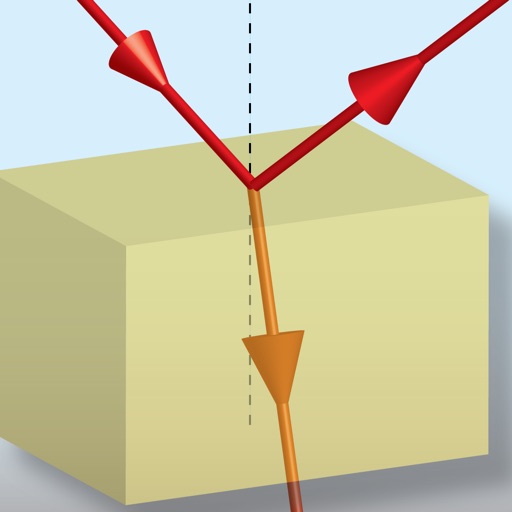
The app calculates the refractive index of transparent materials based on wavelength. It also computes light transmission angles, reflection and transmission coefficients, critical angle, and Brewster’s angle.
University of California, Berkeley's Lawrence Hall of Science
Explore planets, track orbits, build models
Explore the with interactive activities like designing a Moon base and growing plants in space. Learn about planetary features, space travel, and life in space. Track celestial movements and conduct experiments to understand astronomy concepts.
Access real-time data and satellite imagery from multiple sources including Clear Sky Charts, Clear Outside, Meteoblue, Windy, Astrospheric, and Sat24. View water vapor images and track wind patterns.
Monitor geomagnetic storm forecasts and track Earth's magnetic field activity. View storm intensity levels and potential health impacts. Receive alerts for significant changes in magnetic conditions.
APE enables users to evaluate equations in ultrafast and nonlinear laser . It calculates Sum Frequency Generation, Difference Frequency Generation, optical parametric oscillator parameters, and coherent anti-Stokes Raman scattering values.
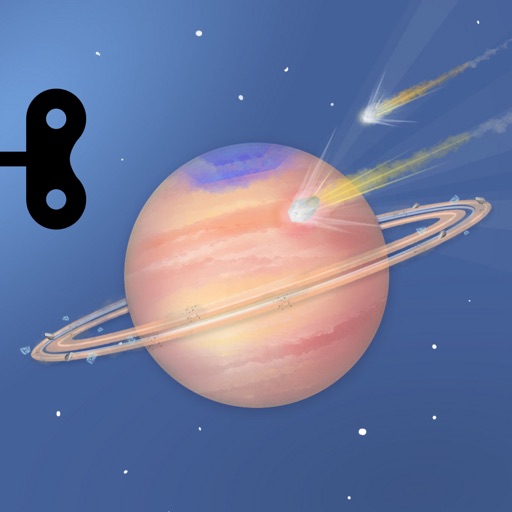
Explore the solar system by visiting planets like Mercury, Venus, Earth, Mars, Jupiter, Saturn, Uranus, and Neptune. Rotate planets, zoom in on surfaces, and launch meteorites through the atmosphere.