Create musical compositions using numbered notation with support for various rhythms and pitches. Input lyrics and accidentals, and adjust key signatures and tempo. Play back notation with sound, select sections for playback, and set instruments.
by 炯龙 吴★ 4.472 ratingsMusicFreeData updated 2026-09-13
Create and explore drum sounds using algorithms. Generate unique sets of 12 drums with 8-character codes. Save, copy, or paste codes for later use. Access sounds via AUv3 and Audiobus.
And arrange , bass, and drum parts in compositions. View and edit tablature for and drum parts. Use MIDI and Inter- Audio instruments for background sounds. Build harmonies and visualize note relationships.
Learn to read music notation with focused practice on -reading skills. Practice identifying notes in treble and bass clefs. Use solfège syllables and Japanese pitch names for diverse notation styles. Track progress and review notes for accuracy.
Create and sequence musical patterns using a 32-step matrix. nd manipulate synth sounds with generative features. Connect via MIDI to external synthesizers for real-time control and sound shaping. Adjust parameters to customize tones and rhythms.
Generate lo-fi sounds using synthesis algorithms with random set selection, code editing, and previous set navigation. Each set includes 12 sounds linked to an 8-character code. Perform live with on-screen buttons, PC keyboard, or MIDI input.
Access for wind, brass, and string instruments with detailed visual guides. Tap to highlight notes, zoom in for clarity, and switch between instruments. Save and share for practice or teaching.
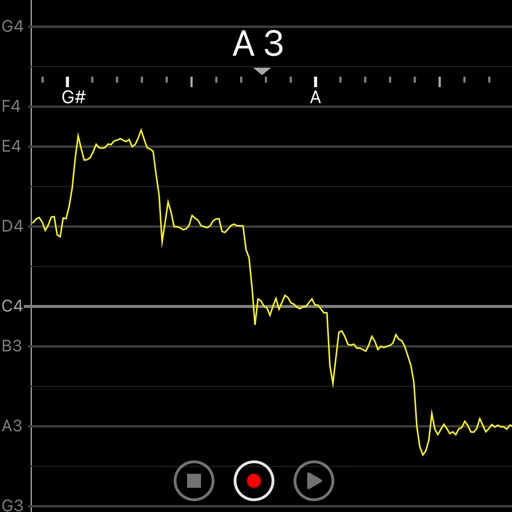
Displays a frequency spectrum for input checking and uses a 440Hz concert pitch. It shows a tuning over five seconds for real-time feedback. Users can adjust pitch and view frequency values. No additional features are included.
Create and customize drum rhythms. Adjust tempo, edit loops, and practice splits. Export compositions. Play along with generated lines. Record and refine exercises. Share or save custom beats.