Explore pelvic structures of fish through photographs of specimens and fossils. Conduct three experiments to collect and analyze data. Use graphing tools and statistical analysis to draw evolutionary conclusions.
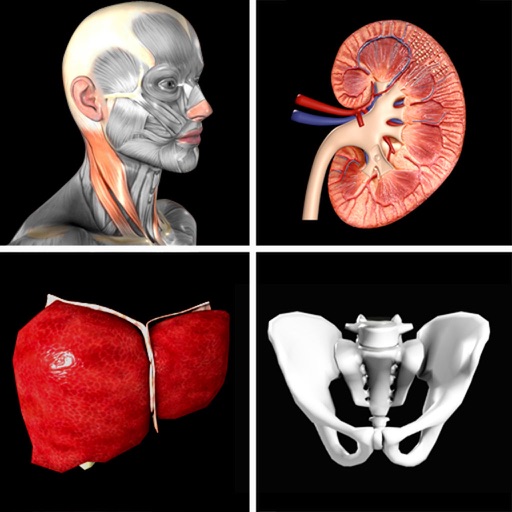
Learn through multiple-choice quizzes on 416 structures or image matching. Create custom quizzes or focus on missed topics. Access 3D renderings of bones, muscles, and organs. Set a timer for timed challenges. Track progress with results.
Provides access to , methods for fostering group participation and collaboration. Users can apply these techniques to meetings or projects. Features include guided prompts, discussion templates, and tools for facilitating inclusive dialogue.
Learn anatomy through x-ray, CT, MRI, and ultrasound images. Identify normal structures and common pathologies. Practice clinical reasoning and test imaging test selection. Track progress with structured curriculum based on training.
Explore the universe from the Big Bang to microscopic structures using interactive VR simulations. Navigate through cosmic scales, view NASA datasets, and examine medical imaging and 3D microscopy.
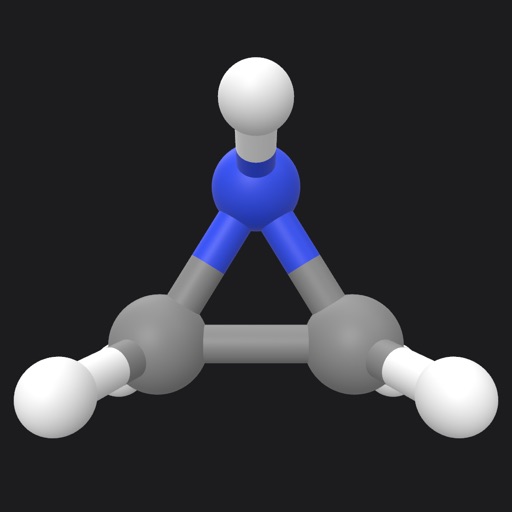
Visualize molecules and proteins using . Place 3D models in real-world environments without markers. Access structures from PubChem and Protein Data Bank. Draw chemical formulas and view them in AR.
Scan assignments to receive step-by-step solutions for math, chemistry, physics, biology, geography, and computer science. Solve equations and problems using AI. Drag and drop files or take photos to input tasks.
Plan surgeries, calculate capacity, stage cancer, view
Capacity can be assessed using interactive tools. Cancer staging includes detailed descriptions and illustrations. 3D viewer allows hiding and showing structures. Tumors can be placed interactively in models. Anatomical illustrations are provided.
Explore electricity generation and delivery systems.
The app explores electricity generation and delivery systems. It introduces electromagnetism and demonstrates current and future energy systems through interactive structures and informational photographs.
Explore human with 3D models of muscles, bones, blood vessels, nerves, and organs. Rotate, zoom, and dissect layers to view internal structures. Access detailed explanations and MRI-based data for each system.