Ask questions about science, technology, engineering, and mathematics directly to professors. Participate in outdoor GPS-based activities to explore and learn in real-world environments.
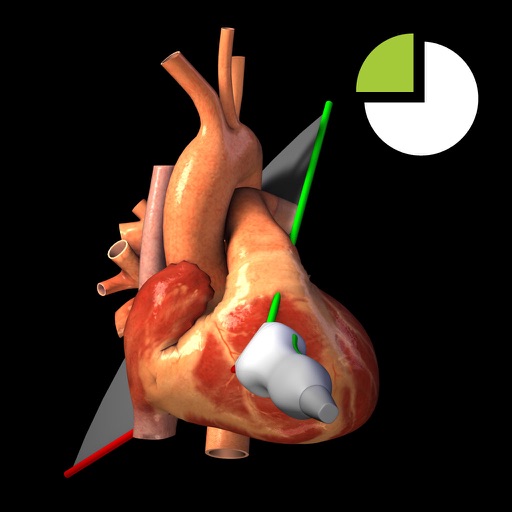
Users can view TTE recordings for 20 cardiac and interact with corresponding 3D heart models. Rotate and adjust 3D models to visualize cardiac structures. Annotate and compare images with reference guidelines.
The app introduces disease as disorder in body systems and functions, focusing on 100 common diseases. It covers normal function, pathology, signs, symptoms, and treatment rationales, organized by body systems.
The app presents detailed medical illustrations, CT scans, and 3D rendered images of wrist anatomy. It includes a series of cases demonstrating hand and wrist pathology.
Naming and writing formulas for ionic and molecular compounds, acids, bases, polyatomic ions, hydrocarbons, and organic functional groups. Choose between -to-name or name-to- exercises. Track progress and repeat exercises for reinforcement.
Practice multiple choice questions with self-assessment tests. Access for school, college, and university students. Download MCQs with answers for distance learning exams. Track progress with practice tests.
Provides educational content on farming techniques, crop cultivation, animal production, and food processing. Users can access detailed lessons on land preparation, harvesting methods, and agricultural engineering principles.
Explore 3D models of atoms and molecules using augmented reality. Interact with different atomic orbitals, viewing their shapes and energy levels. Learn about molecular orbitals through the Hartree-Fock method.
Explore a dynamic, interactive environment where body gestures shape the surrounding . Navigate through a grid of tesseracts. Adjust spatial structures with movement. View a continuously evolving 3D world.
Provides step-by-step text and video tutorials for creating standardized . Users can view two-chamber, three-chamber, four-chamber, and short-axis views.